
The Great 2026 Illusion: Is Your Cash Actually Safe? For decades, our parents gave us the same old advice: work hard, get a stable job, and save money in bank accounts. It sounded like the perfect plan. You sleep soundly at night knowing your numbers on the screen are exactly where you left them. But […]
For decades, our parents gave us the same old advice: work hard, get a stable job, and save money in bank accounts. It sounded like the perfect plan. You sleep soundly at night knowing your numbers on the screen are exactly where you left them.
But here is a wake-up call for 2026: that comfort is an illusion.
If you think keeping all your wealth in a traditional savings account is the safest move you can make today, you need to think twice. The global financial landscape has shifted dramatically over the last few years.
While your local bank might give you a shiny plastic debit card and a mobile app that shows your balance down to the last cent, it is quietly letting your true wealth slip through your fingers.
As working professionals, you sacrifice your time, your energy, and your creative juice to earn a paycheck. You sacrifice family time to put in those extra hours at the office or on remote projects. To take that hard-earned cash and let it sit in an environment where it actively loses purchasing power isn’t just safe, it’s financially dangerous.
Let’s break down exactly why the old playbook is broken and how you can fix it before your savings melt away completely.
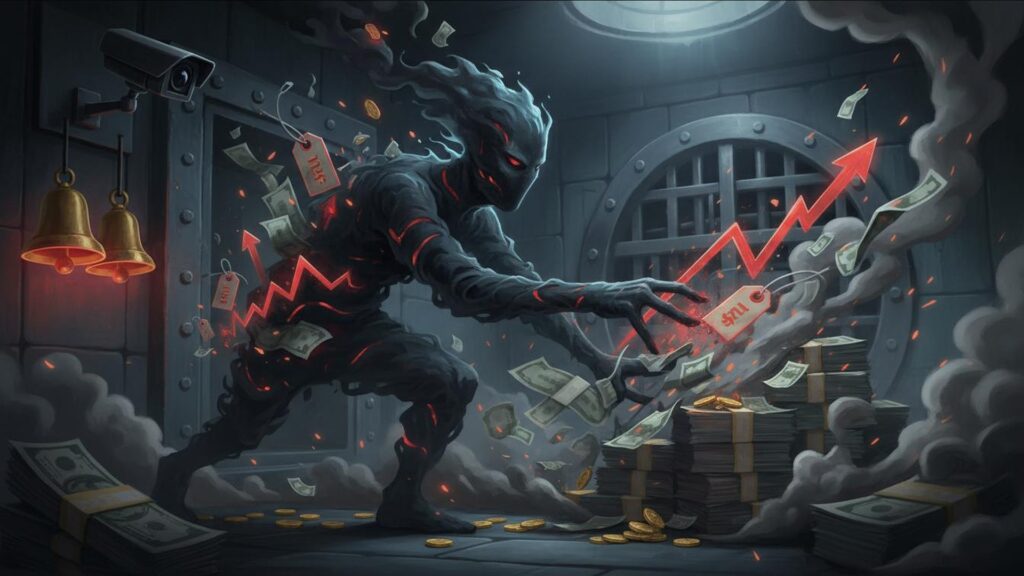
To understand why it is risky to save money in bank options, you must understand a concept called inflation. Think of inflation as a silent thief that sneaks into your bank account every single night. It doesn’t change the numbers in your account balance.
If you have RM50,000 in there today, you will still see RM50,000 tomorrow, next month, and next year. Instead, this thief steals what those numbers can actually buy.
In 2026, we are witnessing the compounding effects of global supply chain shifts, rising energy costs, and everyday price hikes. The cost of a simple cup of coffee, a basket of groceries, a new electric car, or a modern apartment has soared.
The Purchasing Power Rule: If your bank account pays you a 2% annual interest rate, but the real-world cost of living is rising at 5% per year, you are not making money. You are actually losing 3% of your purchasing power every single year.
Imagine leaving a bucket of water out in the hot sun. You didn’t tip the bucket over, and no one stole the water. Yet, day by day, the water level goes down due to evaporation. That is exactly what happens to your cash when you rely solely on a standard savings account. Your wealth is evaporating into thin air.
Let’s put this into a visual format so you can see the math behind the madness. Let’s compare a typical high-yield savings account against the reality of building wealth through tangible assets like real estate.
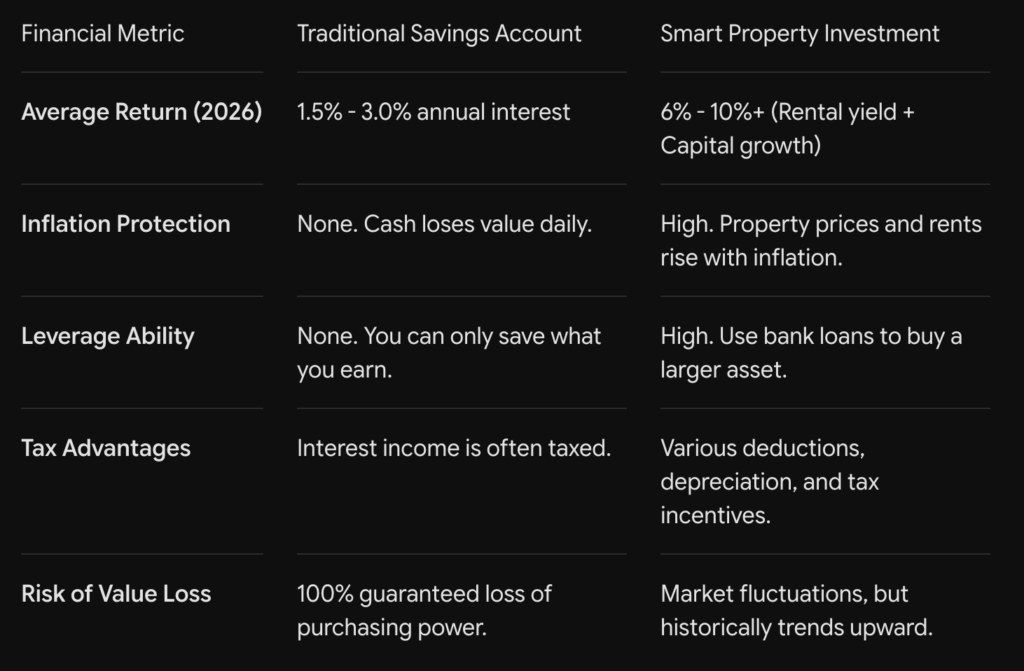
As the table shows, staying purely in cash means signing up for a guaranteed loss of future buying power. To learn more about current macroeconomic shifts and global inflation rates, you can check out the latest updates on the International Monetary Fund (IMF) report.

Many corporate workers, engineers, doctors, and tech specialists feel like they are running on a financial treadmill. You get a promotion, you receive a 5% raise, yet somehow, at the end of the month, your lifestyle doesn’t feel any more luxurious. In fact, you might feel tighter on funds than you did a few years ago.
Why is this happening? It’s because wage growth rarely keeps pace with the asset inflation we see today.
When central banks print more currency, that extra money flows directly into hard assets first things like stocks, gold, and especially prime real estate. The people who own these assets see their net worth shoot upward.
Meanwhile, the people who simply collect a salary and save money in bank products find themselves left behind, paying higher prices for everything without an asset base to protect them.
If you want to step off that treadmill, you have to transition from a consumer mindset to an owner mindset. You need to put your capital into vehicles that benefit from inflation rather than being destroyed by it.

Now that we know the problem, let’s talk about the solution. As an expert who has guided thousands of beginners away from the banking trap, my favorite weapon against inflation is property investment.
Why real estate? Why not just buy volatile digital assets or pick individual stocks? Because property provides a unique combination of stability, predictability, and leverage that a beginner can easily understand.
When you want to save money in bank setups to buy a RM400,000 asset, you have to save the full RM400,000 out of your own pocket. That could take decades.
With property, you don’t need the whole sum. You put down a small deposit (say 10% or 20%), and the bank lends you the rest. If you put down RM40,000 on a RM400,000 property, and that property appreciates by 5% in one year, it gains RM20,000 in value. That RM20,000 gain is a 50% return on your actual invested cash of RM40,000!
Try getting a 50% return from a standard savings account.
When inflation goes up, the cost of milk goes up, gas goes up, and guess what else goes up? Rent.
As a property owner, your tenant pays you a monthly rental income. If the cost of living increases, you can legally adjust your rental rates over time to match market conditions. This means your cash flow scales up naturally alongside inflation, keeping your personal economy perfectly balanced.
Unlike a digital stock portfolio that can drop 20% in a single afternoon because of a CEO’s tweet, real estate is physical. It is made of bricks, mortar, land, and concrete. People will always need a place to live, sleep, and raise their families. That fundamental human need creates a permanent floor for property values over the long term.

If you are a working professional sitting on a decent chunk of savings, taking your first step out of your comfort zone can feel intimidating. You don’t have to quit your job or buy an entire apartment block tomorrow. Start with these three practical, bite-sized steps.
Don’t empty your bank account completely. You still need liquid cash for emergencies—medical bills, car repairs, or temporary job transitions. A good rule of thumb is to keep 3 to 6 months of your actual living expenses in a liquid account.
Anything beyond that emergency buffer should not be saved; it should be deployed. Keeping excess cash in a savings account isn’t safety; it’s financial laziness.
Property investment isn’t about buying random houses. It’s about finding high-demand areas where people want to live. Look for:
Spend a few weekends touring open houses or browsing online listings. Get a feel for the numbers so you can spot a good deal when it appears.
Before you fall in love with a property, talk to a mortgage broker. Find out exactly how much a bank is willing to lend you based on your current professional salary. This gives you an exact shopping budget and transforms you from a casual browser into a serious, confident buyer.
The year 2026 demands a shift in how we manage our wealth. The old routine of working a 9-to-5 job and letting your money rest peacefully in a savings account will no longer guarantee a comfortable retirement or financial freedom.
By understanding the true cost of inflation and taking deliberate steps toward property investment, you can protect your hard work, multiply your wealth, and build a lasting financial legacy. Stop letting the silent thief drain your account. Take control of your money, step off the savings treadmill, and become a strategic investor today.
To help you navigate the changing landscape of 2026, here are direct answers to the most common questions beginners ask about banking, inflation, and asset protection.
No, it is not unsafe in terms of security. Your money is protected from physical theft and bank failures by government insurance schemes up to a certain limit. However, it is economically unsafe. The guaranteed loss of purchasing power due to high inflation means your savings buy less every year.
You should keep an emergency fund equal to 3 to 6 months of your essential living expenses. This ensures you have instant access to cash without needing to liquidate your long-term investments during an emergency.
Property is generally less volatile than the stock market and allows you to use leverage safely. It provides physical utility (shelter) and predictable monthly cash flow through rent, making it easier for a beginner to manage compared to complex stock charts.
Yes. Many working professionals use professional property management companies. For a small percentage of your rental income, a property manager handles tenant screening, rent collection, and repairs, turning your real estate asset into a truly passive income stream.

